Why Do Conflicts Arise in Relationships?
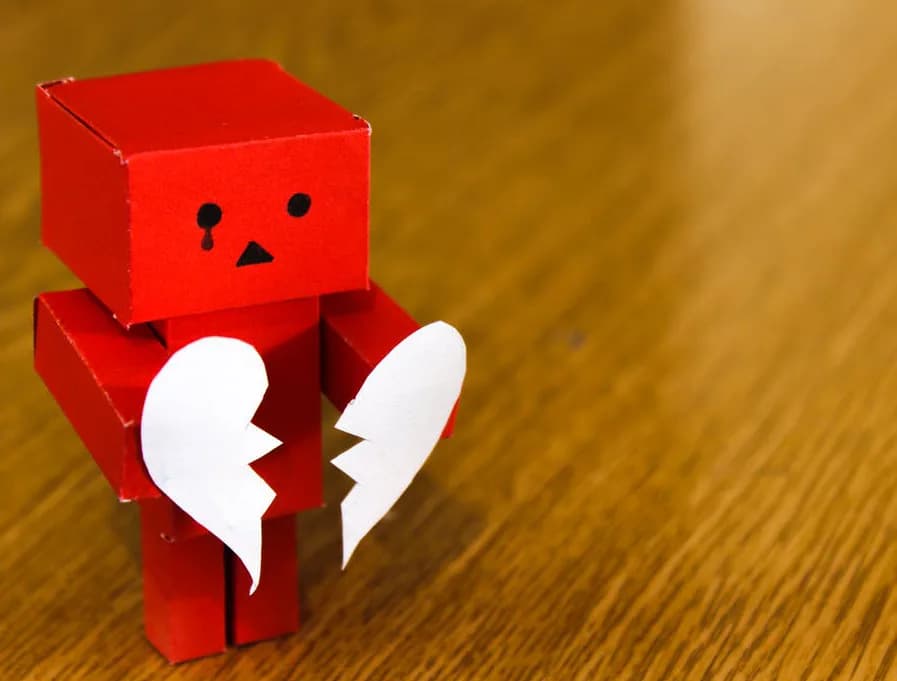
Conflict in a couple's relationship is usually seen as normal, but where is the line for that normality, and what do you do when it keeps repeating around the same subject, sometimes for an entire lifetime?
Dr. Harville Hendrix, a relationship therapist globally renowned for creating Imago therapy, states that couples are usually in conflict for one chronic reason: both partners have transferred their childhood into their couple relationship. This isn't done consciously — rather, it happens like this: you grew up in a family that shaped your emotional experiences, and that experience creates an image in your mind of your parental figures (parents, grandparents, other people who cared for you during childhood).
When you become an adult and start experiencing falling in love — for example, you see someone for the first time and feel an incredibly strong attraction, as if your feet are walking toward that person on their own. That's how falling in love begins; you feel like this is the person of your dreams. What you don't know is that, in your unconscious mind, a program is running that makes you feel attracted to someone similar to those parental figures from your childhood.
What you don't realize at the time, but will come to realize later, is that with that person you'll experience your greatest frustrations — not the best experiences you had with your parental figures in childhood.
So, while at first they seem like the person of your dreams, they'll become the person of your nightmares, and this leads to a power struggle within the relationship.
This is how relationships work: they bring together people who are incompatible, even though they believe they're compatible, so that they can heal each other and grow together.
In conclusion, you fall in love with the person who will activate the parts of you that most need to be developed. That's why it becomes a process through which partners heal and evolve together.
The irony of fate is that you want from your partner exactly the things they're least able to give you: for example, if you like to talk about your feelings, you'll attract a partner who finds this very difficult — though they can learn it from you.
This growth as a couple can only happen when the relationship feels safe; otherwise, each person's defense mechanisms will kick in — those unconscious, defensive reactions through which a situation that can't be controlled is subjectively distorted so it can be accepted emotionally.
Defense mechanisms allow for only partial adaptation, a momentary and surface-level release of psychological tension, which is why their use should be limited over time. In relation to any given situation, their role needs to gradually shrink, while the person builds strategies for direct intervention on the actual problems — the only strategies that lead to complete and effective adaptation.
For example, if as a child you used to hide or go to your room when your parents argued, even though you felt the tension in the house, that's what you'll do when conflict arises in your relationship too: you'll run, shutting down any path of communication with your partner — which doesn't lead to resolution but, on the contrary, allows even more frustration to build up.
How do you create safety in a relationship?
Safety is important for building connection, and connection is extremely important because that's what we are: interconnected beings.
Safety in a relationship means both partners being allies, not enemies. It doesn't all come naturally, as many expect — you have to take action: do the things your partner likes too, appreciate them, give them compliments, surprise them the way you did at the start of the relationship, have the courage to ask your partner for what you need from them, and above all listen to them without judging, trying to put yourself in their shoes every time you feel the urge to criticize them or start an argument.
If you're not experiencing connection, you're experiencing anxiety, and when you experience anxiety, you'll fall into your defense mechanisms.
According to the last 20 years of research in the field of relationships, there is a close link between physical health and relational health.
If you're stressed because of anxiety, your body will produce a toxic substance for your blood called cortisol, which affects your immune system, making you much more prone to illness.
On the other hand, if you experience stable connection and live in a balanced environment, your system will produce endorphins and other substances that benefit your body. This happens when you're the one generating it, not the other way around: your partner acts, and you feel better in the relationship. I lived this way for a long time — when my partner created that environment, but if I wasn't well myself, I couldn't enjoy any of it.
So, if you actively get involved in creating that sense of safety in the relationship, your body's wellbeing will grow in proportion to your involvement.
Dr. Harville Hendrix says that human beings experience a kind of hunger and would eat anything to satisfy it: food, drugs, alcohol, any experience that produces adrenaline (not every risk-related sport is pathological, but it can be). That hunger is, in fact, the hunger for stable CONNECTION, and when you experience it, everything around you goes better and your sense of fulfillment grows. When that connection is missing, your entire system — internal and external — is thrown off balance, searching for that connection.
Building on everything written above, we could say that actively working on yourself, as well as on your relationships — especially your romantic one — is essential. Personally, I spent years not understanding what was happening in my relationships and why I kept ending up at the same point, as if history kept repeating itself and I were just a victim.
I later learned how beneficial education is, after I started working consistently on myself and on the relationship, of course with a guide/specialist, without whom I wouldn't have managed otherwise, because it's hard to see other perspectives when you're caught in the emotional storm.
If you were to look now at your relationship, or at your relational past, what do you think would have changed if you had acted in time — you and your partner — and had looked for solutions to solve your problems instead of fighting for power or for who's right?
With a hug,
Ralu
Clinical psychologist, psychotherapist and ICF-accredited coach at PCC level. I work online with people who want clarity in their career and balance in their life.
Keep reading

How many times have you thought your relationship might end? Safety in a relationship takes many forms — fidelity, financial security, or simply the confidence that things won't fall apart — but at its core, it comes down to trusting yourself to handle whatever comes your way.

A collection of some of my favorite quotes about love and relationships — I hope they inspire you as much as they inspire me.

Have you ever wondered why you have a positive relationship with some people, and are constantly in conflict with others? It might be less about incompatibility than about the part you play yourself.