Mental Models, Thinking Errors, and Their Impact on Business

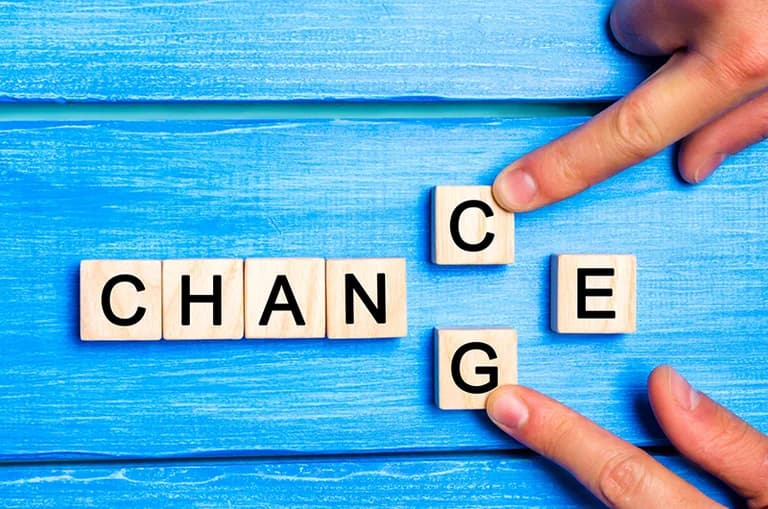
Adapting to change comes through learning new ways of thinking and looking at things
Did you know that around 95% of our behaviors are driven by subconscious programming? Meaning we run on autopilot more than we act consciously?
If you want to change something, you first need to get to know those programs. Then, make them work in your favor.
You probably already know that the people who come out winning in any situation are the ones who have mental toughness and emotional balance.
In the current context, only those who see what's happening as an opportunity for change and growth, and who stay flexible, come out ahead.
Today, the whole world is facing enormous uncertainty, especially when it comes to businesses surviving or adapting to the current context. All we know is that we need to adapt to a changing environment.
How?
Through learning. Through learning new ways of thinking and looking at things. Ways that ultimately lead to new behaviors and actions. These make up our mental models.
A mental model is a thought process specific to each person, one that offers a unique perspective on a problem. In other words, each of us has certain filters through which we process the information coming from the outside world.
But the coolest thing is when you're detached enough to be able to choose which mental model to use in a given situation, instead of running on autopilot through trial and error, with no idea how to solve the problem.
Below are a few mental models you might already be using — or might not even be aware of:
1. Confirmation bias
This is about a belief you hold, where you only look for (in fact, you select) information that confirms it's true. At the same time, you ignore any other evidence or information that contradicts that belief.
For example, you're certain no crisis is coming right now, because governments are supporting the economy and people through all sorts of fiscal measures. They're simply printing as much money as needed.
At the same time, the stock markets are at all-time highs, governments say the economy will recover, and real-estate prices keep climbing. What's more, Google searches for "houses for sale" have gone up 80%. Seeing all this, you ask yourself: "how could a crisis possibly be coming?"
On the other hand, if you're certain a crisis is coming, you have every reason to believe that too, because: COVID case numbers are rising and there doesn't seem to be a solution in the near future, autumn is coming and we know it overlaps with cold and flu season, then winter arrives and people won't be able to sit on restaurant terraces anymore.
As a result, businesses that already have lower revenue than in other years will suffer even more. Then, entrepreneurs who are currently struggling to keep their businesses afloat probably won't have the resources or energy to keep going, and a lot of people will end up unemployed. Add to that the unrest happening in other countries. The US, for example, where it's far from over.
On top of all this, add the sectors hit hardest by shutdowns, and the thousands of small and large businesses that have had to stop operating: event planning and all the services around it. And then you ask yourself: "how could a crisis not be coming?"
Someone once said: "I'm glad when I meet people who disagree with me." Those people give us other perspectives, good or not, that force us out of the patterns we're used to 🙂
2. Inversion
This is one of the most powerful mental models many of us carry (I recently discovered I use it too :)). It consists of thinking about the outcomes you want to avoid, instead of focusing on what you want to achieve. That is, instead of thinking: "how do I make my business succeed?", you think "what could go wrong?".
That way, you make sure not to do those things, or you find a way to prevent them 🙂
Although this model relies mostly on staying alert at every step and isn't always the right solution, it can bring you results in certain moments. Keep in mind, though, that here you lose sight of opportunities because you're focused on not breaking what you already have. That way you become conservative and rigid, when right now, more than ever, what's needed is flexibility and innovation.
3. The law of diminishing returns
At a certain point, after you make an investment, the value of the returns you get will shrink over time. For example, if you start a diet, in the first month you might lose 5 kg, the second month 3 kg, and then 1 kg, because you hit a plateau. From there on, you need a different strategy to keep losing weight: going to the gym, running, and so on.
This is about the actions we prioritize that bring us the highest ROI, as opposed to the ones that eat up a lot of our time and energy but bring very little profit, or even put us in the red. In the end, the benefits you get are smaller than the energy or money you invested.
For example, when you're tired and need rest, you go to sleep. But if you sleep for two or three days straight and don't do anything else, you start aching all over, feeling even groggier and foggier, like after a hangover.
These are just some of the mental models our minds run on. None of them is good or bad.
What matters is that we're aware when we're using them, and that we apply them appropriately depending on the situation.
I'm curious whether you recognized yourself in at least one of the mental models listed above, and more than that, when was the last time you were aware of using it? Or maybe you've discovered other mental models that have helped you during this time and want to share them with us 🙂
Talk soon,
Raluca
Clinical psychologist, psychotherapist and ICF-accredited coach at PCC level. I work online with people who want clarity in their career and balance in their life.
Keep reading

In today's article, I talk about the fears that come up when you want to make a professional change, and how to figure out which choice is right for you right now.
The road from employee to freelancer can be hard if you don't keep certain principles in mind. Find out in today's article what helped me through my own transition.

"I'm working harder than I ever have, and I don't know if it's still worth it." In today's high-speed economy, many leaders — and employees — feel this way, and it's taking a toll on performance.